
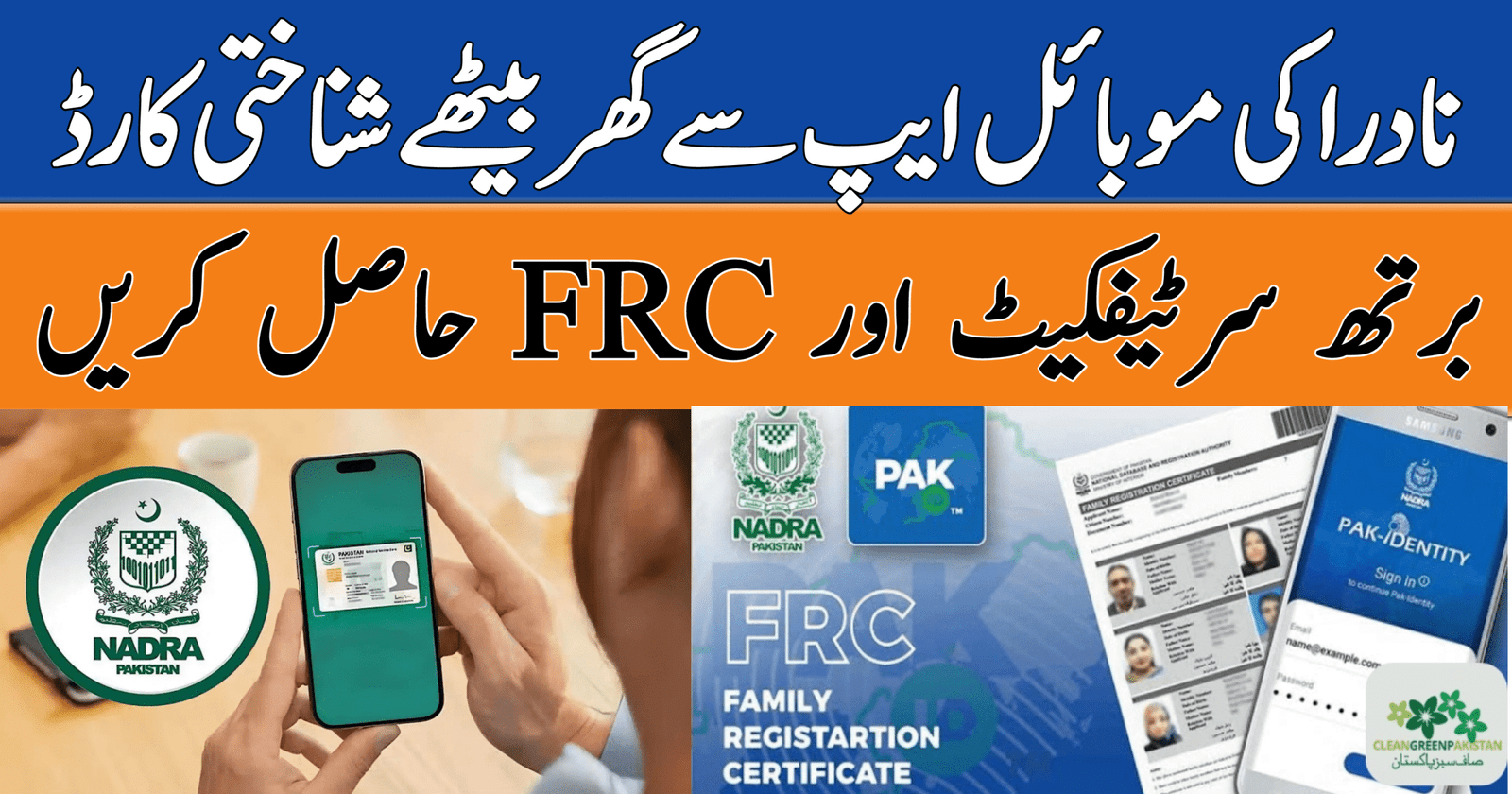
LAHORE (September 2025) – The National Database and Registration Authority (NADRA) has taken another digital step by launching birth and death registration through the Pak-ID mobile app. This new facility will now allow citizens to register these vital events from their homes instead of waiting in long queues at Union Council offices. The update is a major part of Pakistan’s digital governance plan and shows how technology is slowly transforming public services in the country.
For years, Pakistanis have complained about the hectic process of registering births and deaths at government offices. People had to take leave from work, stand in lines, and deal with paperwork delays. Now, with the Pak-ID app (version 5.0.2), NADRA has tried to solve this issue by bringing the entire process to mobile phones. The latest version of the app not only makes registration easier but also introduces multiple new features designed to improve accuracy, security, and convenience.

Table of Contents
Key Features of the New Pak-ID Mobile App Service
NADRA officials have confirmed that the new update is more advanced and secure. Here are the highlights:
- Digital Registration: Citizens can now apply for birth and death certificates through Union Councils digitally.
- Family Composition: Complete details of household members, CNIC status, and expiry dates are available.
- Biometric Verification: Better accuracy in verifying identities with improved categories.
- Real-Time Tracking: People can track their applications at every stage, just like parcel tracking.
- User-Friendly Interface: The new design is cleaner and easier to use, even for first-time users.

Overview of Pak-ID App (Version 5.0.2)
| Feature | Details |
| Service Added | Birth & Death Registration |
| Tracking System | Real-time progress monitoring |
| Biometric Categories | Improved accuracy in ID verification |
| Family Details | Household composition with CNIC expiry dates |
| Interface | Simple, organized, and user-friendly |
Pilot Districts in Punjab
At present, the service has only been rolled out in selected districts of Punjab. These areas are being used as pilot projects before expansion across Pakistan.
The service is now live in:

- Jhelum
- Chakwal
- Nankana Sahib
Authorities have said that once the system proves successful in these districts, it will gradually expand to other provinces as well. Eventually, NADRA aims to make this facility nationwide.
Pilot Districts for Digital Registration
| Province | Districts Covered | Status |
| Punjab | Jhelum, Chakwal, Nankana Sahib | Active (September 2025) |
| Sindh | Coming Soon | Under planning |
| KPK | Coming Soon | Under planning |
| Balochistan | Coming Soon | Under planning |
NADRA’s Role in Pakistan
NADRA has long been at the center of Pakistan’s identity management. It is responsible for:
- CNICs (Computerized National Identity Cards)
- Child Registration Certificates (CRC)
- Voter Registration
- Public Service Databases
Over time, NADRA has moved from traditional paperwork to digital platforms, including mobile apps, biometric verification, and online systems. The launch of this new feature is another example of how NADRA is trying to modernize governance for the benefit of ordinary Pakistanis.

Final Thoughts
The launch of birth and death registration via the Pak-ID mobile app is a big relief for families in Punjab. Instead of traveling to offices and waiting in long lines, citizens can now register these important life events with just a few taps on their smartphones.
This move shows that Pakistan is slowly but surely moving towards digital governance, where services are more transparent, accessible, and efficient. NADRA has made it clear that after successful implementation in Punjab, the service will expand across the country.
For now, people in Jhelum, Chakwal, and Nankana Sahib are the first ones to benefit. Others are advised to download or update their Pak-ID app to version 5.0.2 so they are ready once the service reaches their district.
This digital transformation might sound small today, but in the future, it will save millions of Pakistanis time, money, and effort while ensuring accurate records for the state.